Looking for Something?

Showing posts with label apartment gardening. Show all posts

Friday, June 17, 2016

Farmers Market in Charleston


We get the opportunity to go to a lot of Farmers Markets as we cross the country in our fifth while. We were lucky enough to be in Charleston when they were having a Farmers Market at Marion Square. The subtropical climate must provide great opportunities for growing because the variety and beauty of the produce in the various stalls was amazing.

There were tomatoes everywhere.


I thought that the white and green asparagus was probably the most beautiful thing at the market.


I wanted to buy all the herbs that I could see but it's hard to have a lot of herbs while living in a fifth wheel.


I know we weren't in Georgia but we were close so I wasn't surprised to see peaches as far as the eye could see.


It makes me so happy to go to Farmers Markets and see so many people that grow such beautiful produce, and seeing so many people that appreciate it. Farmers markets are one of my favorite places to be.

Follow our cross country adventure on our blog www.livingagoodstory.com


~Michael~

Wednesday, April 13, 2016

Off-site gardening: Factors to consider before starting roots away from home


Joining a community garden or using extra space in a friend's yard is a great way to grow crops when you don't have room at your own home. You may also know a business or school willing to loan you an area for the summer. Another option is to do as reader Dave Bentz did and purchase vacant lots in his city to convert to gardens. 

I have done three different gardens away from home: a community garden plot offered to university students; part of my husband's grandma's yard, which we shared with his brother; and, most recently, a section next to our friend's cow pasture in our town. My kids called this the "cow garden". We lived in an apartment for the first two gardens, but raised a home garden at the same time we had space near the cow pasture. 

No matter what kind of off-site garden you pursue, maximize the experience by considering these factors:

1. Time. 

This is the single most important factor. Be realistic with how much time you can devote. Include travel time. We dedicated Mondays to take our children to the cow garden and work together. Without a scheduled commitment it is far too easy to say, "Eh, we'll just get to the garden later." Such was the case with our first off-site garden, the university one. Although I was super excited for the plot, the garden fell by the wayside behind our busy jobs and school, fatigue from my first pregnancy and the fact we had only one car. The garden was too far for me to walk when my husband used the vehicle on his job. Excuses, excuses. 

2. Location. 


Go close! If that's not feasible, find a spot that you pass during your regular commutes and routines so you can keep an eye on the garden beyond your scheduled days to work there. Use the same criteria as you would siting a home garden: Does it get adequate light? Fences, trees or other structures that cast shade should be north of a garden area. Afternoon sun (from the west) is harsher than morning light.

3. Space.

There is a space/time relationship just like there is a location/time connection. The bigger the space, the more time it will require to set up and maintain. If you are using a space larger than your home garden you may need to expand your thinking, too. For example, our first summer at the cow garden we planted veggies as close together as we do at home in their grow boxes. If we had known how ferocious the weeds would become, we would have allowed space between plants for a rototiller. 

4. Water

Does the plot have access to water? This is a must in dry climates. Will you pay for water? Is it a sprinkler system, hoses or both? If it is sprinklers, do you have a contact person readily available if something goes wrong with the pipes? (Another reason to check your garden regularly.) One of the biggest contrasts between my home garden and the off-site cow garden (raised simultaneously) was in the watering method. At home I use soaker hoses, drip lines or water plants by hand with a watering can. I seldom get weeds because the ground between plants is not watered. The cow garden's shooting sprinklers, however, watered EVERYTHING. The weeds went wild. The cow garden automatic sprinklers were high on stakes. This overhead water delivery, and the frequency of it, caused more powdery mildew and fungus problems in foliage than I ever had at home. Squash and tomato plants did not fare well, and the tomato skins frequently split.

5. Soil. 

Will it need extensive improvements? If the area has not been used for recent plantings, find out what was there in the past -- old leaky cars could suggest chemical leaching.  It may be worth your while to do a soil test first. At the cow garden, in spring our friend cleaned his barn and spread the manure into the plots. Since the cows had been feasting on weeds, those seeds simply got relocated. The weeds were bionic. 

6. Sharing.  

If you share the space with someone else discuss the division of duties at the beginning of the season. Maybe you work together to till the soil in the whole area and join forces again in fall to clean up. How will you set up traffic areas so that no one's plantings are trampled? Be courteous when planting your crops, remembering that tall ones, like corn, can cast shade or block sprinklers. Pumpkins, squashes and other vine crops will amble well past their boundaries. (There's a reason my kids called it the cow garden!)


Yum, banana squash. Moo.


7. Equipment.

Are tools, hoses and other implements on the property or will you need to bring your own each time you come to your garden? Consider keeping gloves, a spade and a harvest bucket in your trunk so you are ready for impromptu visits.

8. Commitment for the season.

Are you relatively certain the property where you garden won't change hands before the growing season ends? I appreciate that our cow garden friends didn't open up their property for gardening last spring, on the off chance they would need to sell. They didn't want someone to go to all that work without the harvest.


So there you have it. Off-site gardens can supplement your own backyard farm or give opportunities to people who have no space otherwise. I fear my disdain for the cow garden weeds and watering issues came through loud and clear in this post! Still, I am grateful for these new gardening lessons, and to have extra space to produce a harvest like the one above, all picked on a beautiful September morning.


Check out this site for a weekly roundup of ideas from fellow homesteaders.


Thursday, August 13, 2015

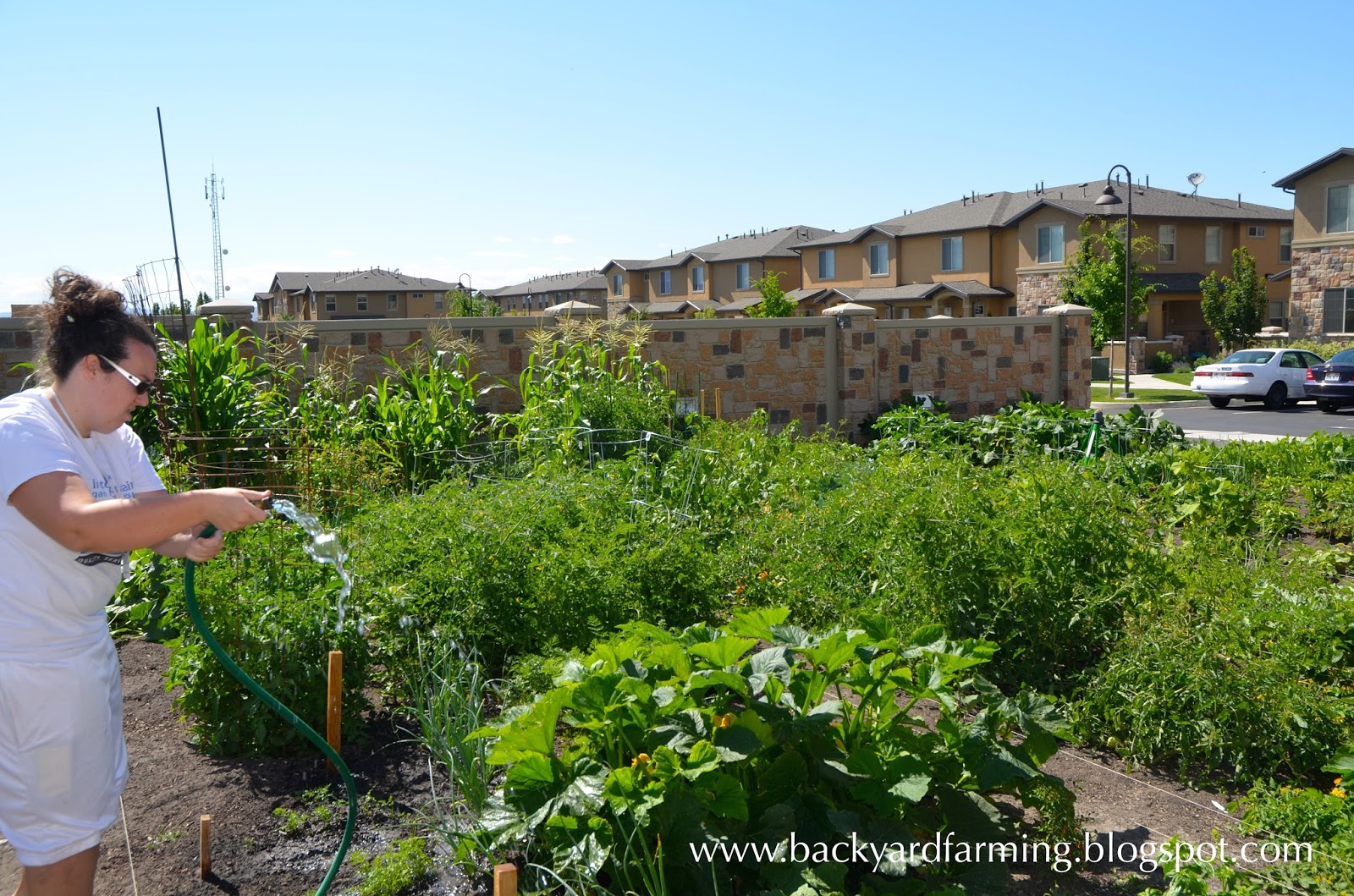
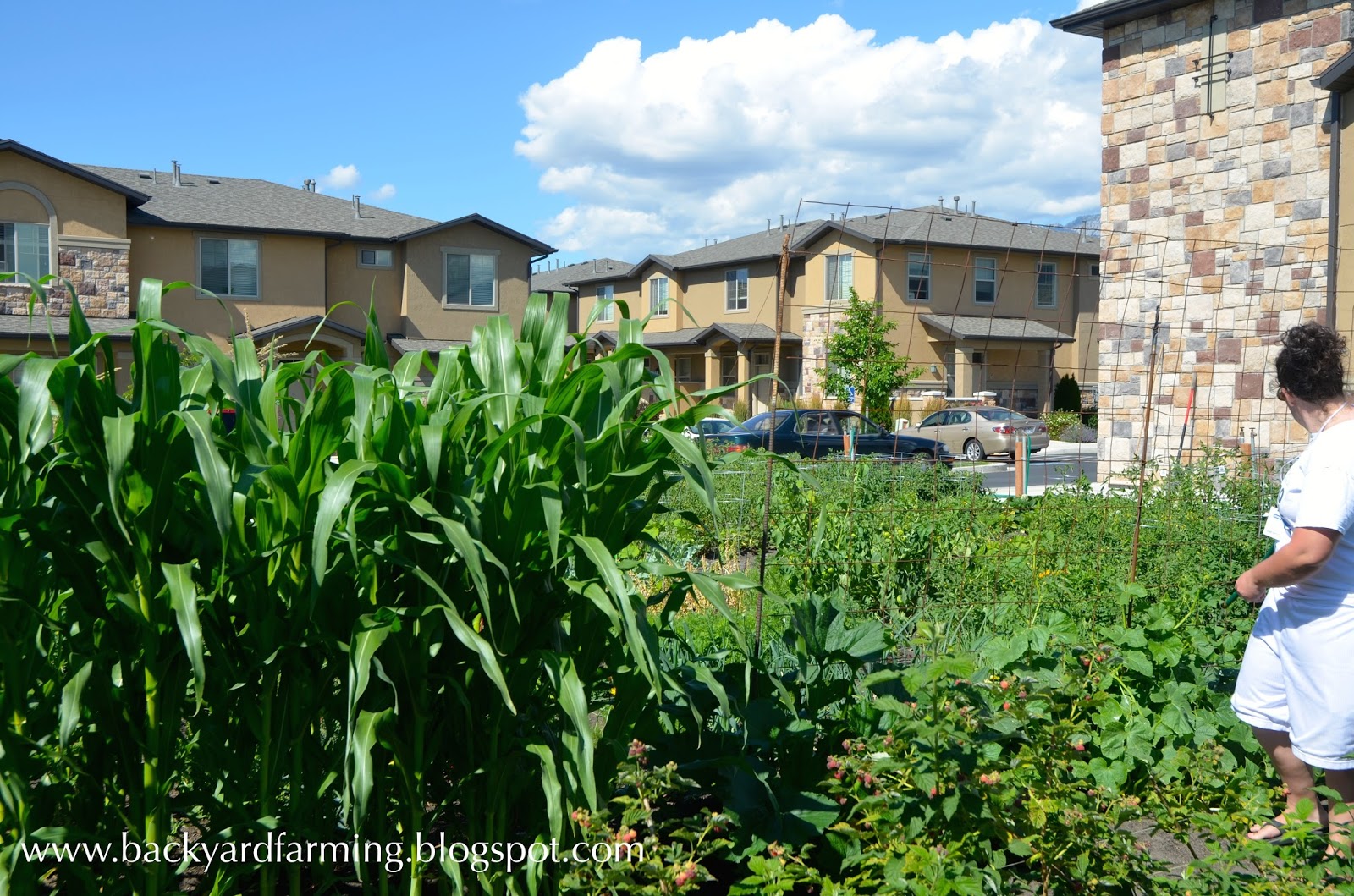
Apartment complex provides garden plots to residents


Having one's own garden can make a space feel like home.

At least, this is the idea that drove the developer of a Northern Utah apartment and town home community to offer vegetable garden plots to its residents.

"Apartments are almost considered as temporary boxes," said James Johnson, property manager of the Four Seasons Apartment Resort in North Logan. "We really wanted to bring more of a home environment to our residents. Thus, the garden idea came to life."

In a complex that also offers a playground, hot tub, pool, gym and massages, Johnson calls the garden one of the community's best features. The garden has 18 plots and an area of fruit trees. This summer residents claim 16 plots: eight are roughly 4x30 feet, another eight are about half that size. The remaining two plots (larger than the others) are tended by the property staff. These plots are open to anyone who wants to putter in the garden. This extends to harvesting, too. Residents can have their fill of the community garden's tomatoes, tomatillos, peppers and more. Johnson and company bring surplus produce into the office to share with anyone who visits.

Plots 1 and 2, shown here on the right, are the community garden tended by staff and anyone else who wants to get their fingers dirty. Residents can harvest all they want.

Residents pay $35 to use the 4x30 plots for the summer. The complex provides hoses and faucets, and gives gardeners the code to access shovels and other tools in a locked shed. The garden has a large compost area. All residents, even those who don't rent a garden plot, are encouraged to bring their produce scraps to the compost area; in fact, each unit's kitchen is equipped with a special compost bucket for this purpose. The property staff regularly rotates the compost.

Top: Fruit trees, smaller lots and part of the compost area. Right: Other side of compost, near larger plots and town homes.


Resident Katie is the gardener of plot 6, where she rasies corn, zucchini and cucumbers ambling up the metal grid. Above is her garden at the beginning of July, below is 2 1/2 weeks later. Katie is thrilled to have this amenity at her apartment complex, and loves to keep her friends and family updated on her latest harvests. Although she grew up with parents who planted a garden, this time gardening is extra enjoyable -- because she considers the space her own. It's a great place to unwind after her shifts as a nurse, she says.


That's precisely what Johnson wanted. An unexpected benefit of the garden is that maintenance workers also have a chance to reset during their other tasks of the day. "It's a stress relief for them, too," Johnson said, noting that if a staff member needs a breather he might say, "'I'm going to work in the garden for half an hour.'"

This is the second year of the garden, and residents are on a waiting list to get in on next year's plots. Johnson said the success of the garden at Four Seasons is shaping the developer's plans to do similar projects in Salt Lake City.

The Four Seasons complex was built with sustainability in mind, Johnson said. The developer negotiated for water rights when buying the property; landscape irrigation is thus provided through recycled groundwater captured in drains. Johnson said Four Seasons accounts for 8 percent of North Logan's population, but that the complex uses only 1 percent of the city's culinary water.


Editor's note: Katie is my relative. I was charmed to hear that her apartment complex provided garden space and knew I needed to visit and see it myself. Sure I've seen community gardens before, but this was the first one I've ever heard of on-site for apartment dwellers. I hope the idea takes off! Tell me, do you have gardens like this in your town?

Friday, July 23, 2010

Balcony Makeover

Remember this ugly balcony?
The balcony door is the only natural light source for our living room and kitchen, and since I love natural light, I constantly have the blinds open and had to look at this eye sore each day. I decided that I needed to make some changes. We have an amazing view of the mountains and I wanted to be able to sit in the evening and drink my herbal tea and look out at my view. Previously all I had to look at was some bikes and dead plants.  I took a trip to the farmers market and the thrift store and here is the finished product. 
Come on in, I'll give you a tour.
Like I said, I wanted a place to sit and drink my tea at night and look at the beautiful mountains. I had previously bought this chair from a thrift store for $5 and painted it blue and cream for my house, but it looks just lovely on the balcony. If it looks like we are going to be here for a while longer, I am going to get a trellis and will grow peas up it on this wall. 

I bought the hanging plant from the farmers market for $4, what a steal! It has 5 basil plants in it and a rosemary plant.  The only problem was I didn't have anywhere to hang it. I bought the shepherds hook and attached it with wire to the railing.
I bought the 3 herbs from the farmers market for $4 each.
Sage, stevia, and lavender. 
I bought this old yeast box from an antique store and thought it would be really cute with some succulents. This was in my dark apartment kitchen and most of the succulents didn't make it, so I decided to give it a try outside with this grouping. I like all the different colors and textures in this corner. 
The unused pots got stacked next to the other plants. I liked the addition of more texture and color that it brought to the grouping.
Now to the middle section. The planters on the railing were previously laying on the floor of the balcony because they are meant to be screwed into a wood railing and I didn't know how to hang them. I ended up just using wire to attach them to the metal railing, and it has worked great. I planted impatiens in the planters to remind me to be patient in my search for a house.
I got this table, the lantern, and the 3 metal candle holders from the thrift store for a total of $11. I was going to paint the table, but once I got it home, I really liked the color of it.
This little corner still needs a little work, but the black eyed susan plant just brightens my day. One of the pots has the remains of a mint plant that my friend Tressa transplanted from her yard for me before she moved. I guess mint dies if you fail to water it for 3 weeks. I have tried to revive it, but I think it is a goner.
This is a raspberry shoot that I dug up from my old house. I'm hoping to keep it alive until we get to our new house. It will be a fun reminder of my first backyard farm. As you can see I have a little helper who likes to throw the dirt all over the patio.
 Which got her banished from the balcony.
But all is well.

~marisa