One of the things that I love about gardening is that it never ends. Even as fall approaches and we start seeing some of our plants dying we can still start preparing for next years harvest. Gardening teaches us about planning for the future, and not getting everything we want now. It shows us what our hard work, and natures gifts can bring. Gardening is a hobby of hope, building on the failures of past, anticipating the harvest of the future. Gardeners always look forward, not forgetting the past, but seeing the past as a stepping stone to future abundance.
Winter is on the horizon here in Utah but it is still a good time to prepare for next year. Start thinking about what you want to grow. I am excited for Marisa and I to get a property (which I think will happen soon) and the first thing I will plant this fall is garlic. I just ordered my garlic bulbs from the seed savers exchange.
You can plant garlic in the spring but if you want bigger better garlic, it is normally better to plant them in the fall. The best time is between September 15th to November 30th while the soil temperature is around 60 degrees F. Most of you still have some time before you buy your garlic seed bulbs and plant them but it is not a bad idea to prepare the soil now.
Garlic is pretty hardy, but you can improve your chance of success by preparing the soil and choosing the right spot to plant. Find an area in your garden that gets plenty of sun, with soil that is not too damp. Till your soil now, add some of the compost from your compost heap, and work it in. Most areas are still warm enough where the soil will have a chance to break down the compost even further, getting it ready to nourish your garlic as it springs to life next year.
Most places that provide garlic seed (which are just cloves of garlic prepared for planting) will provide you with instructions on how much room to give each clove and how deep to plant them. If you are interested in companion planting you can plant garlic next to beets, cabbage, and lettuce as it is said to improve the flavor of beets and it is a natural pesticide for aphids and other pests that threaten lettuce. Keep garlic away from potatoes, peas. and legumes.
We will post next year on when and how to harvest garlic. In the meantime start planning all of the wonderful meals you will eat with garlic to accentuate your fresh vegetables.
Tuesday, August 31, 2010
Fall Planting: Garlic
Sunday, August 29, 2010
Enjoy
-Bill Watterson
Friday, August 27, 2010
How to Raise Kids Awareness to the Benefits of Healthy Foods
Earlier this summer I went on a road trip with my three oldest children to Grand Forks North Dakota. While we were there we went to the famous Whitey's to eat (get the fresh Walleye). For their appetizer they serve a liver pate with crackers and fresh vegetables. My kids did not want to have anything to do with the pate but they downed the plate of fresh veggies like it was going out of style. My Brother's were amazed at how fast they ate the veggies and that they chose them over crackers and bread. I was pleased to say the least.
Don't get me wrong, my kids would sell me up the river for a Starburst or a Tootsie Pop but in general they are open to healthy foods. I have often wondered what things parents can do to inspire the next generation to eat right. I have a few ideas on what has worked for us.
Let them garden: In my opinion, if you want your kids to eat and like veggies, they need to help you in the garden. My children are much more inclined to eat veggies that they know they have grown. At times Mason has said that he doesn't want anything, but if we point out that it came from the garden, then he is all in.
Give them healthy choices: We always have fresh fruit and veggies and the kids can eat them for a "healthy snack" when they need something to tide them over until dinner. Their favorites are apples, jicama, and raw beets.
Set an example: Kids do what their parents do. If you eat healthy then they will follow. Children have a strong sense of hypocrisy and they watch to see what you are doing. I try to hide my diet soda vice from them for this reason but they know better.
Along these lines Jamie Oliver has a new challenge on openIDEO. Watch the video to get a feel about the challenge but he wants people to present ideas on how to help children eat healthier. Comment on this post on what you do to help kids eat healthy and then go to this link to submit your ideas in his contest.
Thursday, August 26, 2010
Real Simple Egg Freshness Test
Test eggs’ freshness. Unsure how long that carton has been sitting in the back of the refrigerator? Simply drop each egg into a bowl of water. If it lies on its side on the bottom, it’s fresh. If it stands on end, use it within a couple of days. Eggs that float to the top should be tossed on the spot.
Wednesday, August 25, 2010
Raw Milk Consumers Win Round One
http://www.ftcldf.org/press/
Tuesday, August 24, 2010
Feeding Fiasco
The one that thinks he is going to be a Power Ranger when he grows up,
The kid that is ONLY FOUR YEARS OLD!

I guess I will give this a try.

Not bad, I think he's got it.
Check out this ridiculous face he is making!


Monday, August 23, 2010
For just a few dollars, you too can be a farmer...
I am in serious farm dreaming mode lately. I don't know why but every once in a while my desire for some land and some animals becomes an acute ache. But since I am firmly embedded in suburbia for now and unable to have more the 6 hens(which I have), I go down the street to Thanksgiving Point's Farm Country and talk to the cows, ride in trailers pulled by retired farmers, and feed the ridiculously cute goats. It helps for a while but like any unnatural stimulant, I crash after-wards and want a farm more than ever. I listen to Dolly Parton, peruse rural real estate, and plan future orchard placement and animal housing. Oh well, I'm addicted. Someday I'll have the real deal.
~megan
Sunday, August 22, 2010
Perfection
~Alice Walker
Saturday, August 21, 2010
Backyard farm kitchen
Friday, August 20, 2010
Dryer Sachets-DIY
My good friend Holly from Spotted Owl Soap is our guest writer today.
If you've ever wondered what to do with your leftover herbs at the end of the season, you're not alone. Every year I'm faced with a glut of mint, lavender, rosemary, sage and more. Some of it I freeze to use in the kitchen throughout the winter, but usually I can barely make a dent before spring comes around again. If you're faced with a surplus of flowers and herbs you hate to see shrivel with the first frost, here is an idea to enjoy summer's fragrant bounty indoors, all winter long.
Homemade laundry detergent has been gaining popularity with frugal families everywhere and homemade dryer sachets are a perfect compliment. They are also an excellent idea for anyone with perfume sensitivities or allergies. Best of all, they are reusable, natural, and easy to make.
Start with dried flowers or herbs of your choice. I like Lavender because it grows well in my area and the scent is a personal favorite. Other herbs and plant parts that work well with lavender are mint, ci
trus (dried rind or lemongrass) and rosemary as well as most common flowers. Be creative and use favorites that grow plentifully in your area. Nearly anything that works in potpourri will work in a dryer sachet.
An average sachet contains 1-2 cups of dried herbs. You can use a variety of pouches from sewn fabric cases to pre-made muslin baggies to heat sealable tea bags* - even an old sock with a knot will work as long as it is free of holes.
If you keep essential oils in the house, you may add a few drops of complimentary scent to your herb blend. Be aware that adding flammable oils to a hot dryer could be dangerous, so proceed sparingly and with caution. Steer clear of synthetic fragrance oils which are often more volatile.
Seal or tie the sachet container shut and pop it in the dryer with moist clothes. The sachet can be reused many times. For lavender sachets, it helps to squeeze the bag between dryer loads. This frees up more of the fragrant oils inside the buds.
If you've already taken the "green initiative" and started venting your dryer inside your home**, you'll enjoy the added benefit of a natural air freshener.

Once dryer sachets are exhausted, they can be placed in dresser drawers for a light fragrance.
Dryer and drawer sachets make great gifts for anyone with sensitive skin, new babies or perfume allergies. Lavender is simple to grow in many climates and the sachets are very inexpensive to make - mine cost just pennies. It's not uncommon to see these sachets in stores for $12 each.
(example: http://www.amazon.com/gp/
* Heat sealable bags and muslin bags are available from herb and spice suppliers such as San Francisco Herb (sfherb.com). For those who can't grow lavender, it can be purchased in bulk from the same company - around $10 a pound (20 sachets).
**http://www.brighthub.com/
Thursday, August 19, 2010
Salmonella Outbreak in Eggs
This is another reason to get chickens so you can have your own farm fresh eggs. I find it ironic that this isn't very big news. If it had happened with a small farmer's eggs or raw milk we would have NSA, FBI, And CIA agents storming the farm and it would be all over the internet. I guess it's true that money makes the world go round. Can anyone say conspiracy?
Wednesday, August 18, 2010
Brussel Sprouts - bleck or yummy?
When I was in high school, I was curious about those cute little cabbage looking veggies. How could everyone hate it so much when it is so cute? I asked my mom to buy some so I could try them. Being the good mom that she is, she obliged, knowing full well that I would hate them. She bought a bag of frozen brussel sprouts that I popped in the microwave, pulled out with great anticipation, took a bite, and went right to the sink to spit it out.
Fast forward a few years later. I was at a little cafe downtown with some girlfriends and the vegetable served with my meal was none other than brussel sprouts. Being the adventurous eater that I am, and again being drawn to the cuteness of a brussel sprout, I took a bite. Holy Moly, they tasted delicious!
Fast forward again a few years, to just a few weeks ago when I received brussel sprouts in my bountiful basket. I remembered from a few years back that they DID have the potential to be good. I just needed to prepare them correctly. I did some research and now I'm going to pass this yumminess onto you!
~marisa
Monday, August 16, 2010
Boo Hoo
Tree Talk
As Marisa and I anticipate getting a new bigger property we have started to plan what we want to grow. We want a lot of what we had on our smaller backyard farm. A vegetable garden, strawberries, raspberries, chickens, and medicinal herbs. We just want more variety and bigger plots of these things. We also look forward to delving into new areas of farming that we have never tried. We are excited to have bees, goats, rabbits, and fruit trees.
Did you know that apples, pears, quinces, cherries, peaches nectarines, apricots, plums, damsons, raspberries, blackberries, strawberries, and the rose all belong to the same family? They are all part of the plant family Rosaceae. Don't ask me how to pronounce this. They are divided into sub groups that include those that have stone fruits, like cherries, and plums, those that have berries like raspberries and strawberries; and pomes which include apples and pears.
Did you know that if you plan it right you can have the same types of trees that bear fruit at different times of the year. For example, there are some apples that bear fruit in the late spring and other apples bear fruit in the fall.
Did you know that most varieties of fruit will not breed true from seed. Instead, cuttings from a fruit bearing tree (called the scion) are usually grafted onto a rootstock. The rootstock is a different tissue type than the scion, and the root and the branches grow together but remain biologically different.
Did you know that some fruit bearing trees are full size, but you can also grow dwarf or semi dwarf trees? The dwarf trees are smaller and take up less space on a smaller property. You can grow many varieties of dwarf trees only 6 feet apart from each other. Marisa and I think we might want to raise a small orchard of dwarf trees.
Do any of you have experience growing fruit trees? What advice would you give us as we start the process of planning what types of trees to get for our property. We probably won't start until next spring but it's never too early to begin learning about it.
Sunday, August 15, 2010
Someday Eyes
Gardening requires my "someday" eyes.
The children I raise need the same approach. One recent day I was particularly hurt that my teenager exploded in anger when his sister's sudden sickness prevented our trip to the amusement park. I was so upset with him. Where was his compassion?
Where, too, was mine?
I sought a quiet moment to reconcile my negative feelings. I came to understand my son's disappointment and his limited tools to express and control it. Even greater, a picture formed in the upper right corner of my mind. I saw him as a man, leaning beside his own daughter in the bathroom and stroking her hair out of the way. Blond, I think.
Someday.
I saw my son for all the potential within him, and my heart swelled anew with the charge to get him there.
~Jennifer
Friday, August 13, 2010
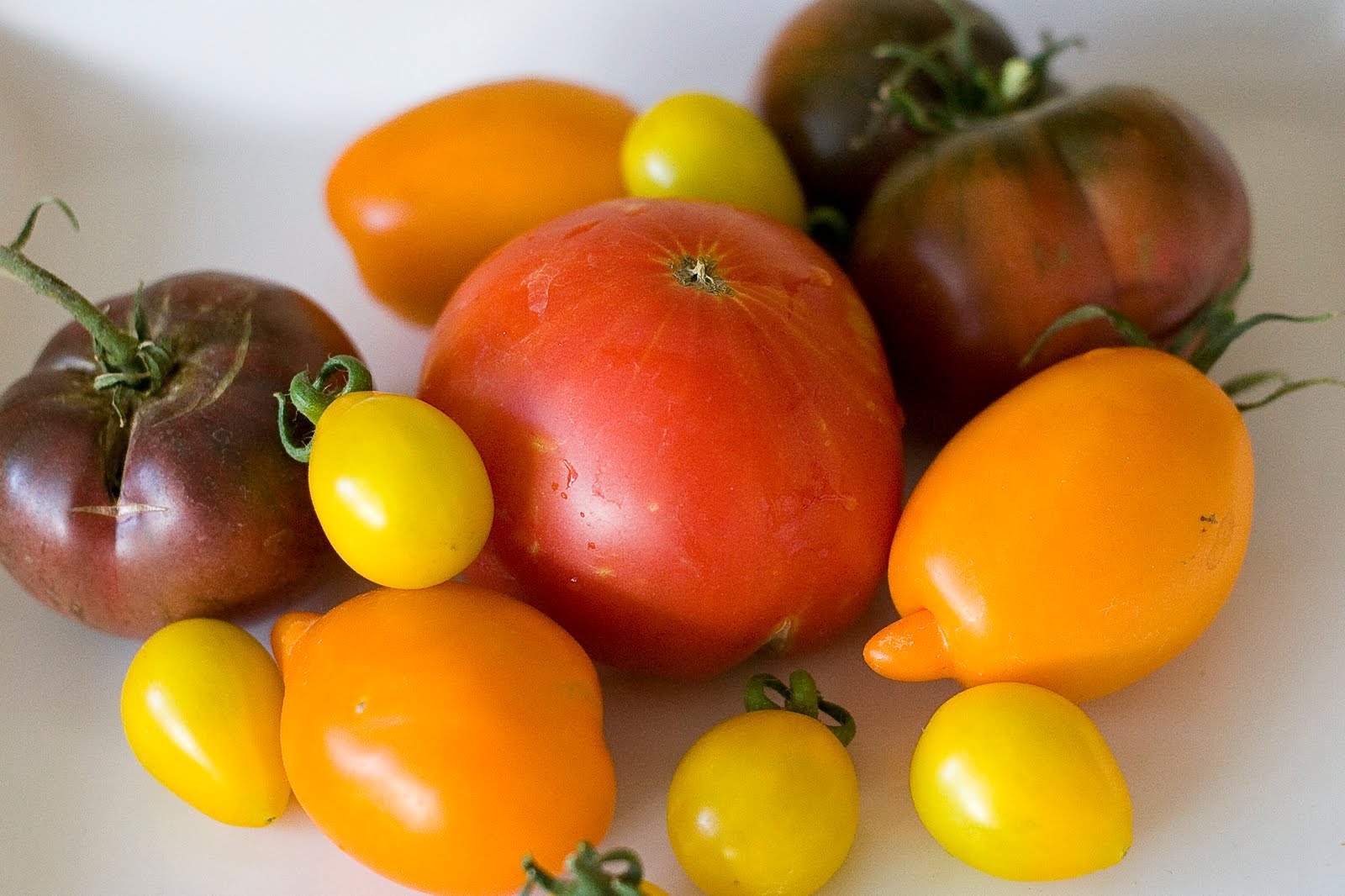
Tomato Tip
UPDATE: Maybelline, a faithful backyard farming reader, left a comment saying that you don't need to blanch and peel the tomatoes before freezing (even better, right?) Just run them under warm water and the skins should peel right off.